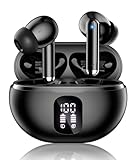
How to Answer Calls with Earbuds: A Complete Guide
We all rely on earbuds these days. They’re essential for listening to music, podcasts, and audiobooks. But did you know your earbuds are also a fantastic tool for taking calls? Forget fumbling for your phone or yelling into the speakerphone. Using earbuds for calls offers a level of convenience and privacy that can significantly improve your daily routine. This guide will walk you through everything you need to know about using earbuds to answer calls, from the basics to advanced tips and tricks.
Whether you’re using wireless earbuds like AirPods or a wired headset, understanding how to answer calls with your earbuds is a valuable skill. We’ll cover the different methods for answering, managing calls, and troubleshooting any issues you might encounter. We’ll also explore the advantages of using earbuds for calls, including improved audio quality, hands-free operation, and enhanced privacy. Get ready to transform the way you handle calls!
This guide is designed for everyone, from tech novices to seasoned users. I’ll break down the process step-by-step, providing clear instructions and helpful advice along the way. Let’s get started and learn how to make the most of your earbuds for calls.
Understanding How Earbuds Work for Calls
Before we dive into the specifics of answering calls, let’s understand how earbuds facilitate phone conversations. Most modern earbuds, both wired and wireless, come equipped with a built-in microphone. This microphone captures your voice, transmitting it to the other person on the call. Simultaneously, the earbuds’ speakers reproduce the other person’s voice, allowing you to hear them clearly.
The key components involved are the microphone, the speakers, and the connection method. Wireless earbuds use Bluetooth to connect to your phone, while wired earbuds connect via a 3.5mm jack or a Lightning/USB-C connector. The microphone’s quality varies depending on the earbud model, but generally, it’s designed to filter out background noise to provide clear audio. Similarly, the speakers’ quality determines how well you can hear the caller.
The phone itself is the central hub, managing the call and relaying the audio signals between the earbuds and the cellular network. The phone’s operating system (iOS or Android) also plays a crucial role in call management, allowing you to answer, reject, mute, and adjust the volume through the earbuds or the phone’s interface.
Bluetooth technology’s role is critical for wireless earbuds, enabling a wireless connection between the earbuds and your phone. The Bluetooth protocol transmits audio data and control signals, such as answering or ending a call, over the air. Bluetooth versions have evolved over time, with newer versions offering improved audio quality, greater range, and better battery efficiency.
Wired vs. Wireless Earbuds for Calls: A Comparison
Both wired and wireless earbuds offer the ability to answer calls, but they differ in several aspects. Understanding these differences can help you choose the best option for your needs. Here’s a comparison:
| Feature | Wired Earbuds | Wireless Earbuds |
|---|---|---|
| Connectivity | Direct connection via 3.5mm jack, Lightning, or USB-C | Bluetooth |
| Portability | Less portable (tangled wires) | More portable (no wires) |
| Battery Life | No battery required | Requires charging (typically 4-8 hours of talk time) |
| Audio Quality | Generally good, less prone to interference | Can be excellent, but dependent on Bluetooth connection |
| Ease of Use | Simple, plug-and-play | Requires pairing, can be more complex |
| Cost | Generally more affordable | Can be more expensive |
| Hands-Free | Yes, but limited by wire length | Completely hands-free |
Wired earbuds offer the simplicity of a direct connection and don’t require charging. They are less susceptible to interference and often provide a reliable audio experience. However, the wires can be inconvenient, and the range is limited by the cord’s length. Wireless earbuds provide greater freedom of movement and are ideal for hands-free use. They require charging, but the convenience of wireless connectivity often outweighs this drawback. Wireless earbuds are becoming increasingly popular due to their portability and modern features.
How to Answer Calls with Different Types of Earbuds
Answering Calls with Wireless Earbuds
Answering calls with wireless earbuds is usually straightforward, but the exact method can vary slightly depending on the brand and model of your earbuds. The general steps are as follows:
- Ensure your earbuds are connected to your phone. This usually involves pairing them via Bluetooth in your phone’s settings.
- When a call comes in, you’ll typically hear a ringtone in your earbuds. The ringtone confirms the connection is active.
- Answer the call. This is usually done by tapping a button on the earbud itself. The specific button and number of taps vary:
- Single tap: Often answers the call.
- Double tap: Can answer or reject the call, depending on settings.
- Long press: May activate voice assistant (Siri, Google Assistant) or reject the call.
- Alternatively, you can answer the call on your phone’s screen. The audio will automatically switch to your earbuds if they are connected.
- To end the call, tap the same button you used to answer the call, or use the phone’s screen.
Important Note: Consult your earbud’s manual for specific instructions on answering and ending calls, as button functions may differ.
Answering Calls with Wired Earbuds
Answering calls with wired earbuds is generally even simpler than with wireless ones. Here’s how:
- Plug the earbuds into your phone’s headphone jack (3.5mm) or charging port (Lightning/USB-C).
- When a call comes in, you’ll hear the ringtone through your earbuds.
- Answer the call using the inline remote control. Most wired earbuds have a remote with a button for answering/ending calls:
- Single press: Usually answers/ends the call.
- Double press: May skip to the next track (for music control).
- Alternatively, you can answer the call on your phone’s screen. The audio will automatically switch to your earbuds once you answer.
- To end the call, press the button on the inline remote or use your phone’s screen.
Wired earbuds usually have a straightforward setup. The remote control’s simplicity allows for easy call management without needing to look at your phone.
Managing Calls with Your Earbuds
Beyond answering and ending calls, your earbuds offer various features for managing calls effectively. These functions enhance your ability to communicate clearly and efficiently.
Muting and Unmuting
Muting is a vital feature, especially in noisy environments or when you need to speak privately. The mute function silences your microphone, preventing the caller from hearing your side of the conversation. Unmuting restores the microphone, allowing the caller to hear you again.
How to mute/unmute varies:
- Wireless Earbuds: Often involves a button press. Check your earbud manual for the specific method (e.g., double-tap, long-press). The voice assistant may also allow muting.
- Wired Earbuds: Many wired earbuds have a dedicated mute button on the inline remote. If not, use your phone’s interface.
- Phone Interface: You can always use the mute button on your phone’s screen, which will mute the call regardless of the earbud type.
Adjusting Volume
Adjusting the volume is essential for comfortable listening. You can control the call volume through your earbuds or your phone.
- Wireless Earbuds: Many have volume controls on the earbuds themselves (e.g., sliding controls, tapping). Check your manual.
- Wired Earbuds: Often have volume buttons on the inline remote.
- Phone Interface: The volume buttons on your phone will also adjust the call volume.
Adjusting the volume ensures you can hear the caller clearly without straining your ears. It is especially important in noisy environments.
Rejecting Calls
Sometimes, you can’t answer a call immediately. Your earbuds typically allow you to reject incoming calls without needing to take out your phone.
- Wireless Earbuds: Usually involves a long press or a specific number of taps on the earbud button. See your manual.
- Wired Earbuds: Often, you can reject calls by a long press on the remote button.
- Phone Interface: You can always reject calls via your phone’s screen.
Rejecting calls is useful when you’re busy or don’t want to answer at that moment. It sends the call to voicemail or ends the call, depending on your phone settings.
Using Voice Assistants
Many earbuds integrate with voice assistants like Siri (iOS) or Google Assistant (Android). This allows you to manage calls hands-free.
- Activating: Usually, this involves a long press on the earbud or a voice command (e.g., “Hey Siri”).
- Call Management: You can use voice commands to answer, reject, mute, or end calls.
- Other Functions: Voice assistants can also dial numbers, check contacts, and more.
Voice assistants provide added convenience, especially when your hands are occupied. They enhance the hands-free experience.
Troubleshooting Common Issues
While using earbuds for calls is generally reliable, you might encounter some issues. Here’s how to troubleshoot common problems:
No Sound or Poor Audio Quality
Problem: You can’t hear the caller, or the audio is distorted or choppy.
Solutions:
- Check the volume: Ensure the volume is turned up on both your earbuds and your phone.
- Check the connection: Make sure your earbuds are properly connected (Bluetooth for wireless, physically plugged in for wired).
- Restart your device: A simple restart can often resolve software glitches.
- Check for interference: Move away from other Bluetooth devices or sources of interference (microwaves, Wi-Fi routers).
- Clean the earbuds: Debris can block the speakers. Gently clean the earbud grilles.
- Check earbud balance: Ensure that the audio balance is not skewed to one side.
- Update the software: Make sure your phone’s operating system and earbud firmware are up to date.
Microphone Problems
Problem: The caller can’t hear you, or your voice is muffled.
Solutions:
- Check the microphone: Make sure the microphone isn’t blocked by debris or your clothing.
- Test the microphone: Make a test call to see if the problem persists.
- Check the mute button: Ensure the microphone is not muted.
- Move to a quieter environment: Background noise can interfere with the microphone.
- Ensure proper positioning: Position the earbuds correctly in your ears for optimal microphone performance.
- Check the earbud’s microphone settings: Some earbuds have noise-cancellation features that may be interfering with your voice.
- Update the software: Ensure your phone and earbud firmware are updated.
Bluetooth Connection Issues (wireless Earbuds)
Problem: Your wireless earbuds won’t connect or disconnect frequently.
Solutions:
- Ensure Bluetooth is enabled: Make sure Bluetooth is turned on in your phone’s settings.
- Pair the earbuds: Re-pair the earbuds to your phone.
- Check the distance: Stay within the Bluetooth range (usually around 30 feet).
- Charge the earbuds: Low battery can cause connection problems.
- Forget and re-pair: In your phone’s Bluetooth settings, “forget” the earbuds and then re-pair them.
- Restart your phone: A simple restart often resolves Bluetooth issues.
- Update the software: Ensure your phone’s operating system is up to date.
Earbud Not Working with Specific Apps
Problem: Your earbuds work for calls but not with certain apps (e.g., video conferencing).
Solutions:
- Check app settings: Ensure the app is configured to use your earbuds’ microphone and speakers.
- Grant microphone permissions: Make sure the app has permission to access your microphone.
- Test with other apps: See if the problem is specific to one app or all.
- Update the app: Ensure the app is up to date.
- Restart the app: Close and reopen the app.
- Restart your device: A simple restart can sometimes fix this.
Other Considerations
Compatibility: Ensure your earbuds are compatible with your phone’s operating system (iOS or Android). Most modern earbuds work seamlessly with both platforms, but always check the product specifications.
Firmware Updates: Regularly check for firmware updates for your earbuds. These updates often include bug fixes and performance improvements. You can usually update the firmware through the manufacturer’s app.
Battery Life: Be mindful of your earbuds’ battery life, especially when traveling or during long calls. Carry a charging case or charger if needed.
Warranty and Support: Keep your purchase receipt and check the manufacturer’s warranty information in case of any defects or issues. Utilize the manufacturer’s support resources (website, customer service) if you need help.
Maximizing Your Earbud Experience
To get the most out of your earbuds for calls, consider these additional tips:
- Choose the right earbuds: Select earbuds that fit comfortably and provide good sound quality. Consider factors like noise cancellation, microphone quality, and battery life.
- Optimize your environment: Take calls in a quiet environment to minimize background noise and improve call clarity.
- Practice proper etiquette: Speak clearly and at a normal volume. Avoid yelling or speaking too quietly. Be mindful of your surroundings.
- Use noise cancellation: If your earbuds have noise cancellation, enable it to reduce background noise and improve the caller’s experience.
- Experiment with settings: Adjust the volume, equalizer settings, and other audio settings to optimize the sound quality for your preferences.
- Keep your earbuds clean: Regularly clean your earbuds to remove debris and ensure optimal performance.
- Protect your earbuds: Store your earbuds in a protective case when not in use to prevent damage.
- Consider a dedicated headset: For frequent or professional calls, a dedicated headset with a boom microphone may offer superior audio quality and comfort.
By following these tips, you can ensure a positive and productive call experience using your earbuds.
Final Thoughts
Using earbuds to answer calls is a simple yet powerful way to enhance your communication experience. Whether you prefer wired or wireless options, the benefits of hands-free operation, improved audio quality, and enhanced privacy are clear. By understanding the basics, mastering the controls, and troubleshooting common issues, you can make the most of this convenient feature. Remember to choose the right earbuds for your needs, optimize your environment, and practice good call etiquette. Embrace the convenience and efficiency that earbuds bring to your calls, and enjoy clearer, more comfortable conversations wherever you go.
With the information in this guide, you now have the tools and knowledge to confidently answer, manage, and troubleshoot calls using your earbuds. From the initial setup to advanced tips and troubleshooting techniques, you’re well-equipped to transform how you handle phone conversations. So, the next time a call comes in, reach for your earbuds and experience the difference.
Ultimately, answering calls with earbuds is about making your life easier and more efficient. It’s about staying connected while remaining comfortable and productive. By following these guidelines, you can seamlessly integrate this technology into your daily routine and enjoy a superior calling experience. Now go forth and enjoy the freedom and convenience of answering calls with your earbuds!
Recommended Products