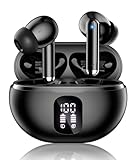
Are Earbuds Compatible with Android Phones? A Comprehensive Guide
So, you’re in the market for some new earbuds, or maybe you’ve already got a pair and are wondering if they’ll play nice with your Android phone. It’s a valid question! The world of wireless audio can feel a bit like a tech jungle, with different standards, features, and compatibility issues lurking around every corner.
Fear not, though. We’re going to clear up the confusion and get you up to speed on everything you need to know about Android earbuds compatibility. We’ll explore the different types of earbuds, the connection methods, and the features you should be looking for. By the end of this guide, you’ll be able to confidently choose the perfect earbuds for your Android device and enjoy your favorite music, podcasts, and calls without a hitch.
Let’s get started!
Understanding Earbud Types and Android Compatibility
Before diving deep, let’s clarify the different types of earbuds and how they generally interact with Android phones. This understanding is crucial for making informed decisions.
Wired Earbuds
Wired earbuds, the OG of audio, connect to your phone via a 3.5mm headphone jack or, increasingly, through the USB-C port. Compatibility with Android is almost guaranteed, provided your phone has the appropriate port. The quality of the audio depends on the earbud’s build and the phone’s audio processing capabilities.
- Pros: Simple to use, no battery concerns, generally more affordable.
- Cons: Can get tangled, less convenient for movement, and the 3.5mm jack is disappearing from many newer phones.
Wireless Earbuds
Wireless earbuds, also known as Bluetooth earbuds, connect to your phone via Bluetooth. This is the most common type of earbud today. Compatibility with Android phones is excellent, as almost all Android devices have Bluetooth capabilities. The user experience can vary based on the Bluetooth version and the earbud’s features.
- Pros: Cord-free convenience, often packed with extra features like noise cancellation and touch controls.
- Cons: Require charging, potential for Bluetooth interference, and can be more expensive.
True Wireless Earbuds (tws)
True Wireless Stereo (TWS) earbuds are a subset of wireless earbuds. They are completely independent of each other, with no connecting wire between the two earpieces. They connect to your phone via Bluetooth, offering maximum freedom. Compatibility is the same as with other wireless earbuds, as long as your Android phone supports Bluetooth.
- Pros: Complete freedom of movement, very compact, often have a charging case for extended battery life.
- Cons: Can be easily lost, battery life can be a concern, and often the most expensive option.
Bluetooth: The Key to Android Earbud Connection
Bluetooth is the core technology that makes wireless earbuds work with your Android phone. Understanding how Bluetooth works is essential for troubleshooting and optimizing your experience.
Bluetooth Versions and Compatibility
Bluetooth versions evolve, with each new iteration bringing improvements in speed, range, and power efficiency. The latest versions are backward compatible, meaning older Bluetooth devices will work with newer phones, albeit with the limitations of the older standard.
- Bluetooth 5.0 and later: Offers significant improvements over older versions, including faster transfer speeds, a longer range, and better power efficiency. Many modern Android phones and earbuds use Bluetooth 5.0 or later.
- Bluetooth 4.2 and earlier: Still functional, but may experience limitations in terms of range and battery life compared to newer versions.
When choosing earbuds, consider the Bluetooth version supported by your Android phone and the earbud. Ideally, both should support the same, or at least a recent, Bluetooth version for optimal performance.
Pairing Your Earbuds with Your Android Phone
Pairing your earbuds with your Android phone is a straightforward process:
- Enable Bluetooth: On your Android phone, go to Settings > Connections > Bluetooth and turn Bluetooth on.
- Put Earbuds in Pairing Mode: Refer to your earbud’s manual to learn how to put them in pairing mode. This typically involves pressing and holding a button on the earbuds or the charging case.
- Select Your Earbuds: Your phone should scan for available Bluetooth devices. Once your earbuds appear in the list, tap on them to initiate the pairing process.
- Confirm Pairing: You may be prompted to confirm the pairing or enter a PIN code (usually 0000).
- Connection Established: Once paired, your earbuds should connect automatically whenever they are within range and powered on.
If you experience any issues, make sure your earbuds are fully charged, are not already connected to another device, and are within range of your phone.
Troubleshooting Bluetooth Connection Issues
Sometimes, you might encounter issues with your Bluetooth connection. Here’s how to troubleshoot common problems:
- Earbuds Not Appearing: Ensure your earbuds are in pairing mode and are charged. Restart both your phone and your earbuds.
- Unstable Connection: Move closer to your phone. Reduce interference from other Bluetooth devices or Wi-Fi routers.
- Sound Issues: Check the earbud’s volume settings and the phone’s volume settings. Ensure the earbuds are selected as the audio output device.
- Pairing Problems: Clear the Bluetooth cache on your phone (Settings > Apps > Bluetooth > Storage > Clear Cache). Unpair and re-pair the earbuds.
Features to Consider When Choosing Earbuds for Android
Beyond basic compatibility, several features can significantly enhance your earbud experience with your Android phone. Let’s explore some key features.
Audio Quality
Audio quality is paramount. Look for earbuds that support high-quality audio codecs, such as:
- SBC: The basic Bluetooth codec, supported by all Bluetooth devices.
- AAC: A common codec, often used by Apple devices, but also supported by many Android phones.
- aptX: A higher-quality codec developed by Qualcomm, offering better audio fidelity.
- aptX HD: An even higher-quality version of aptX, providing near-lossless audio.
- LDAC: A high-resolution audio codec developed by Sony, offering exceptional sound quality.
The best codecs supported by both your phone and the earbuds will determine the sound quality.
Noise Cancellation
Active Noise Cancellation (ANC) uses microphones to detect ambient noise and then generates opposite sound waves to cancel it out. This is highly effective in noisy environments, such as on airplanes or in busy offices. Passive noise isolation, achieved through a snug fit, also helps block out external sounds.
Microphone Quality
If you take calls frequently, microphone quality is crucial. Look for earbuds with multiple microphones and noise-canceling capabilities to ensure clear voice pickup.
Battery Life
Battery life varies depending on the earbud model and usage. Consider the following:
- Earbud Battery Life: The amount of time the earbuds can play audio on a single charge.
- Charging Case Battery Life: The number of additional charges the charging case can provide.
- Quick Charging: Some earbuds support quick charging, providing several hours of playback with a short charging session.
Water Resistance
If you plan to use your earbuds during workouts or in wet conditions, water resistance is essential. Look for an IPX rating (Ingress Protection rating):
- IPX4: Splash-proof.
- IPX5: Water-resistant.
- IPX7: Waterproof (can be submerged in water for a short time).
- IPX8: Waterproof (can be submerged in water for longer periods).
Comfort and Fit
Comfort is highly subjective. Consider these factors:
- Ear Tip Material: Silicone ear tips are the most common, but foam tips can provide a better seal and more comfortable fit for some.
- Fit Style: In-ear, on-ear, and over-ear styles offer different levels of comfort and noise isolation.
- Size and Weight: Lighter earbuds are generally more comfortable for extended use.
Touch Controls and Voice Assistants
Many earbuds feature touch controls for managing music playback, answering calls, and adjusting volume. Some also offer voice assistant integration, allowing you to access Google Assistant or other voice assistants with a simple tap or voice command.
Android-Specific Features and Considerations
Android provides some specific features that enhance the earbud experience.
Fast Pair
Google’s Fast Pair feature simplifies the pairing process for compatible earbuds. When you bring your earbuds close to your phone, a notification pops up, allowing you to quickly pair them with a single tap.
Google Assistant Integration
Many earbuds offer seamless integration with Google Assistant. You can activate Assistant with a tap or voice command to control music, get information, and manage your smart home devices.
Earbud Customization Apps
Many earbud manufacturers offer companion apps for Android that allow you to customize settings, update firmware, and access additional features.
Comparing Earbud Features: A Quick Table
Here’s a quick comparison of key features to help you make an informed decision:
| Feature | Description |
|---|---|
| Bluetooth Version | Check for the latest version for improved performance. |
| Audio Codecs | Look for support for high-quality codecs like aptX or LDAC. |
| Noise Cancellation | Consider ANC for noisy environments. |
| Microphone Quality | Essential for clear calls. |
| Battery Life | Check earbud and charging case battery life. |
| Water Resistance | Necessary for workouts and wet conditions. |
| Comfort and Fit | Choose a style and ear tips that fit comfortably. |
| Fast Pair | Simplifies pairing with Android devices. |
| Google Assistant Integration | Convenient for voice control. |
| Customization Apps | Allows you to customize settings and update firmware. |
Popular Earbud Brands Compatible with Android
Several brands consistently deliver excellent Android-compatible earbuds. Here are some of the most popular:
- Samsung: Offers a wide range of Galaxy Buds with excellent features and integration with Samsung devices.
- Google: Pixel Buds provide seamless integration with Android and Google services.
- Sony: Known for their high-quality audio and advanced features, including excellent noise cancellation.
- Jabra: Offers a variety of earbuds with a focus on call quality and durability.
- Soundcore (Anker): Provides a great balance of features, quality, and affordability.
- Beats: Offers stylish and powerful earbuds, often with a focus on bass-heavy sound.
- OnePlus: Offers competitive earbuds with good features and value.
- Technics: Known for their audiophile-grade audio quality.
Researching reviews and comparing features across different brands will help you find the best earbuds for your specific needs and budget.
Tips for Optimizing Your Earbud Experience
Here are some tips to maximize your enjoyment of your Android earbuds:
- Keep Your Earbuds Charged: Regularly charge your earbuds and charging case to avoid running out of power.
- Update Firmware: Regularly check for firmware updates through the companion app to ensure optimal performance and access to the latest features.
- Clean Your Earbuds: Clean your earbuds regularly to remove earwax and debris, which can affect sound quality and hygiene.
- Experiment with Ear Tips: Try different sizes and types of ear tips to find the best fit and seal for optimal comfort and sound quality.
- Customize Your Settings: Use the companion app to customize EQ settings, touch controls, and other features to personalize your listening experience.
- Manage Bluetooth Connections: If you have multiple Bluetooth devices, manage your connections to ensure your earbuds connect to the correct device.
- Troubleshoot Sound Issues: If you experience sound issues, try restarting your earbuds, your phone, or both. Check the volume levels on both the earbuds and the phone.
The Future of Earbuds and Android
The earbud market is constantly evolving, with new features and technologies emerging regularly. Here are some trends to watch:
- Improved Audio Quality: Expect to see even higher-resolution audio codecs and advanced audio processing technologies.
- Enhanced Noise Cancellation: Noise cancellation technology will continue to improve, becoming more effective and adaptable to different environments.
- Advanced Health Features: Future earbuds may incorporate health monitoring features, such as heart rate tracking and activity monitoring.
- Spatial Audio: Spatial audio technology will create a more immersive listening experience.
- Integration with AI: Artificial intelligence will play a bigger role in personalizing the audio experience, adapting to your preferences and environment.
As Android and earbud technologies continue to advance, the possibilities for enhanced audio experiences are endless.
Conclusion
Choosing earbuds for your Android phone doesn’t have to be complicated. By understanding the basics of compatibility, considering the features that matter most to you, and exploring the options available, you can find the perfect pair to elevate your listening experience. From Bluetooth connectivity to noise cancellation and comfort, the right earbuds can transform how you enjoy music, podcasts, and calls on your Android device. With the information provided in this guide, you are well-equipped to make an informed decision and enjoy your audio on the go.
Remember to prioritize the features that align with your lifestyle and listening preferences. Whether it’s superior sound quality, long battery life, or robust water resistance, there’s an earbud model designed to meet your specific needs. Researching different brands, reading reviews, and trying out different models (if possible) will help you find the ideal fit. Happy listening!
Recommended Products